How to convert a 2 bedroom house to a 3 bedroom without extending
The ways to add value to a property, and the layout trick that turned a 2 bed into a 3 bed and added £45,000 to the valuation.
Every investor wants to know how to add value to a property, because it's the value you add that lets you pull your money back out. Most people think the biggest one, an extra bedroom, means a loft conversion or an extension. On a lot of 2 bed houses it doesn't. You can convert a 2 bedroom house to a 3 bedroom inside the walls it already has.
I did it on a 2 bed semi on Bourne Road. As a done-up 2 bed it would have valued at around £180,000. As a 3 bed it valued at £225,000. That's £45,000 more, with no extension and no planning application, and further down I'll show you the numbers both ways, side by side.
First I'll go through the ways you can add value and why a bedroom beats the rest. Then the trick itself, what I did on Bourne Road, the planning and building regulations, and how to tell whether the house you're looking at can do the same.
What I say about planning and building regulations is as it stood when I wrote this, in November 2026, for England. Rules change, so check the current position before you rely on it. It's education, not advice, and the small print is at the end.
How to add value to a property in the UK
When you buy a house to let, you want it to be worth more once you've done the work than it cost you to buy and do. That gap is the value you've added. When you refinance, the lender lends a percentage of the new value, so the more value you've added, the more of your money comes back out to do the next one.
These are the main ways to add value to a house in the UK:
- Do it up. A tired house with an old kitchen, old bathroom and old electrics is worth less than the same house done up.
- Fix what's putting other buyers off. Cracks, damp or a bad roof scare people away, which is why those houses sell cheap. Fix the problem and the discount goes.
- Make it more energy efficient. Insulation and a better EPC rating make it cheaper to run, which helps it let.
- Add space, with an extension or a loft conversion.
- Add a bedroom.
They're not equal. Doing it up gets you to the top of what similar houses sell for. Adding a bedroom changes which houses yours is compared with, and that's the one that moves the valuation most.
People often think a second bathroom does the same. In my experience it's the bedroom count that moves the valuation, not the bathrooms. If you've got the space for a second bathroom or a third bedroom, take the bedroom.
How much value does a third bedroom add?
Houses are compared and priced by their number of bedrooms. When you search Rightmove, you pick 2 bed or 3 bed. When a valuer values a house, they look at what similar houses sold for, and similar starts with the bedroom count. So when a 2 bed becomes a 3 bed, it stops being compared with 2 beds and starts being compared with 3 beds.
Nationwide's 2025 analysis puts a number on it. Adding space to create an extra double bedroom can add 13% to the value of a typical 2 bed house, and around 12% to the rent, about £125 a month. But read the small print on that: Nationwide assumed the new bedroom was 13 square metres, and it's an average across the country.
On your street the gap could be bigger or smaller. On the Bourne Road house it was 25%. That's why I challenge mentees who value a conversion at only a little more than the 2 bed. I get them to check what 3 beds on the same street have sold for, because that's what the valuer will do.
How to convert a 2 bedroom house to a 3 bedroom without extending
So why doesn't everyone add one? Because most people picture the expensive way. There are 4 common ways to convert a 2 bedroom house to a 3 bedroom:
- Convert the loft into a bedroom.
- Build an extension, usually over a ground floor room or a garage.
- Split one big bedroom into 2 smaller ones.
- Rework the first floor so the bathroom moves over the stairs and its old room becomes the third bedroom.
The first 2 add floor area, so they cost the most and often need planning permission. The last 2 use space the house already has. That's why they're the ones I look for first.
Most people never think of the last one, because they've never seen it done. That's normal. Nobody shows you a floor plan and points out the third bedroom. You only start looking once you know it can be there.
Putting the bathroom over the stairs
Stand on the landing of a lot of 2 bed semis and terraces and you'll see it. The stairs come up through the middle of the first floor. In one of the bedrooms there's a raised box, sometimes with a cupboard on top of it. That box is called the stair bulkhead. It's there because the stairs need head height underneath it, and it's often the reason one bedroom feels small and awkward.
The space above and around that box usually gets wasted. It becomes a cupboard, a shelf for a suitcase, or the end of a bed nobody can walk round.
Then there's the bathroom. On a lot of older 2 bed houses it's at the back, often in the narrow part over the kitchen, and it's a decent size room with its own window.
So you swap them round. You take a strip off the bedroom next to the stairs and put a new wall up, and that strip plus the space over the stairs becomes the new bathroom. The bath sits up on top of the box over the stairs, where nothing else would go. The old bathroom at the back, with its window, becomes bedroom 3.
Nothing changes on the outside of the house, and you haven't added any floor space. A bathroom doesn't care about a box in the floor. A bedroom does. So the bathroom goes where the box is, and the bedroom gets the room with the good window.
It won't work on every house. It depends on where the stairs sit, whether the bedroom next to them can lose a strip and still be a proper bedroom, where the new bathroom's waste can run, and whether the window in the old bathroom is big enough for a bedroom. If the bathroom is downstairs at the back, which is common in older terraces, it's a different job, because you're adding a bathroom upstairs rather than swapping rooms. But when the layout fits, it's one of the cheapest ways I know to add a bedroom.
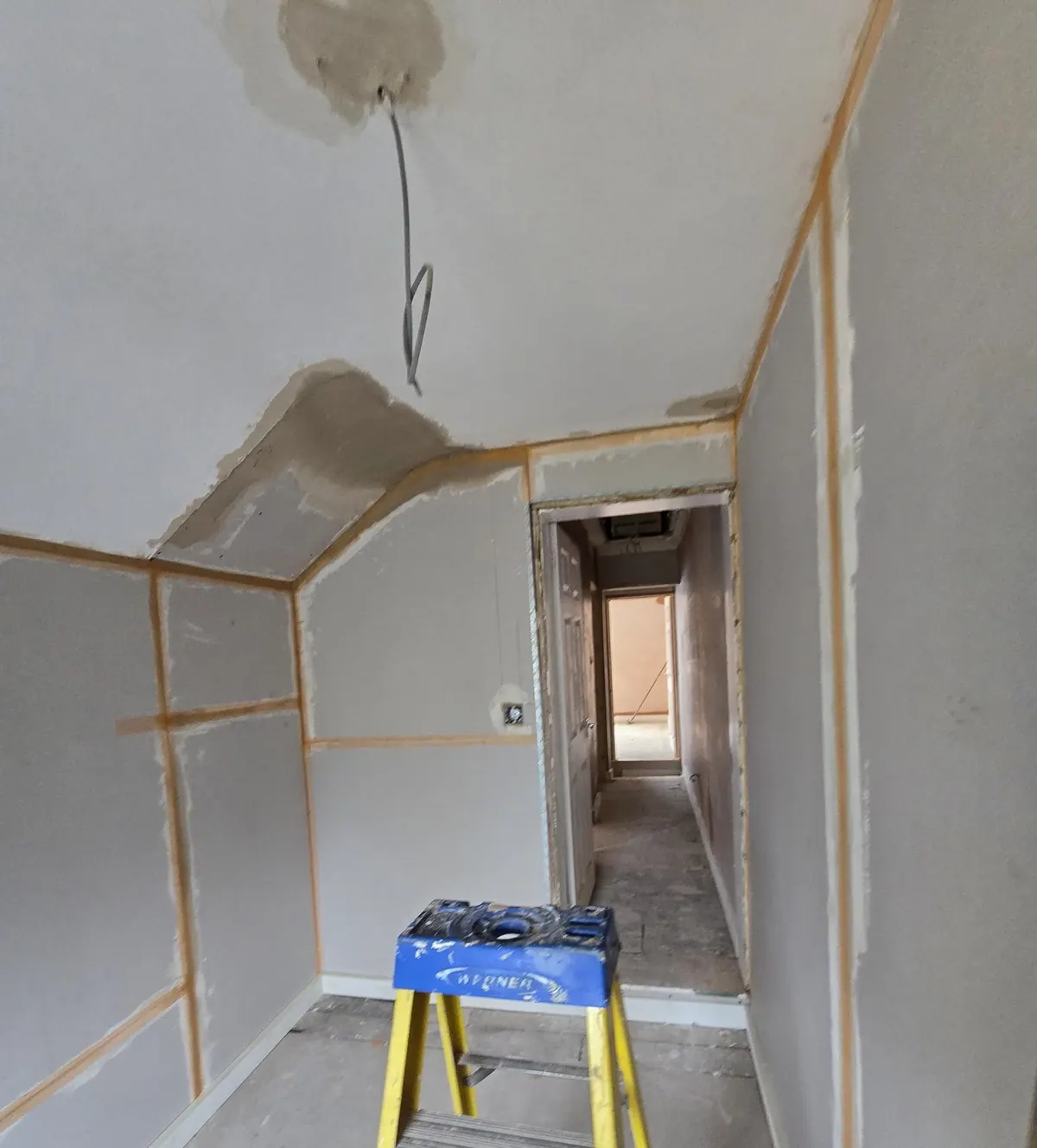
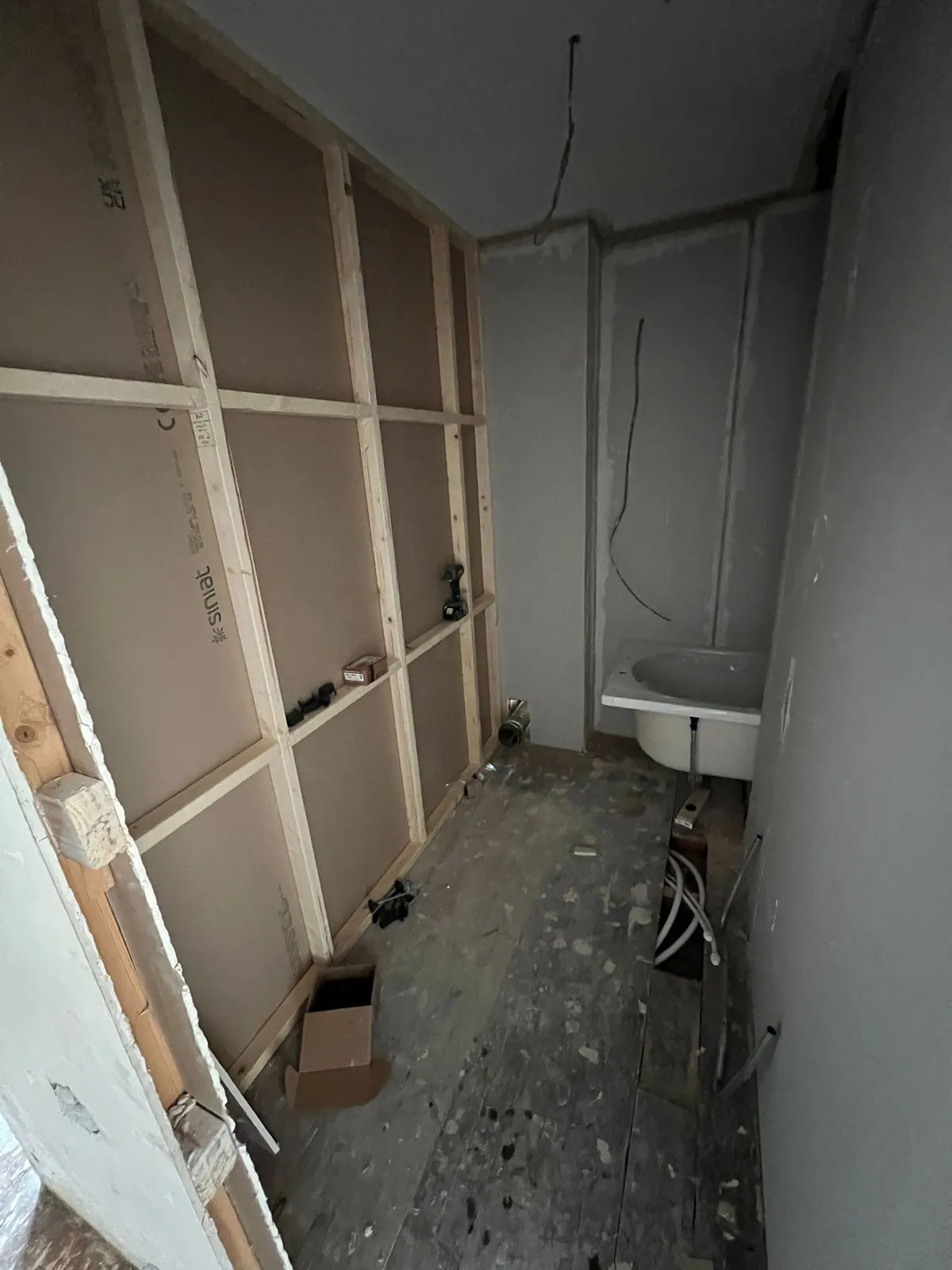
This is what it looks like part way through and finished, on one of our conversions.
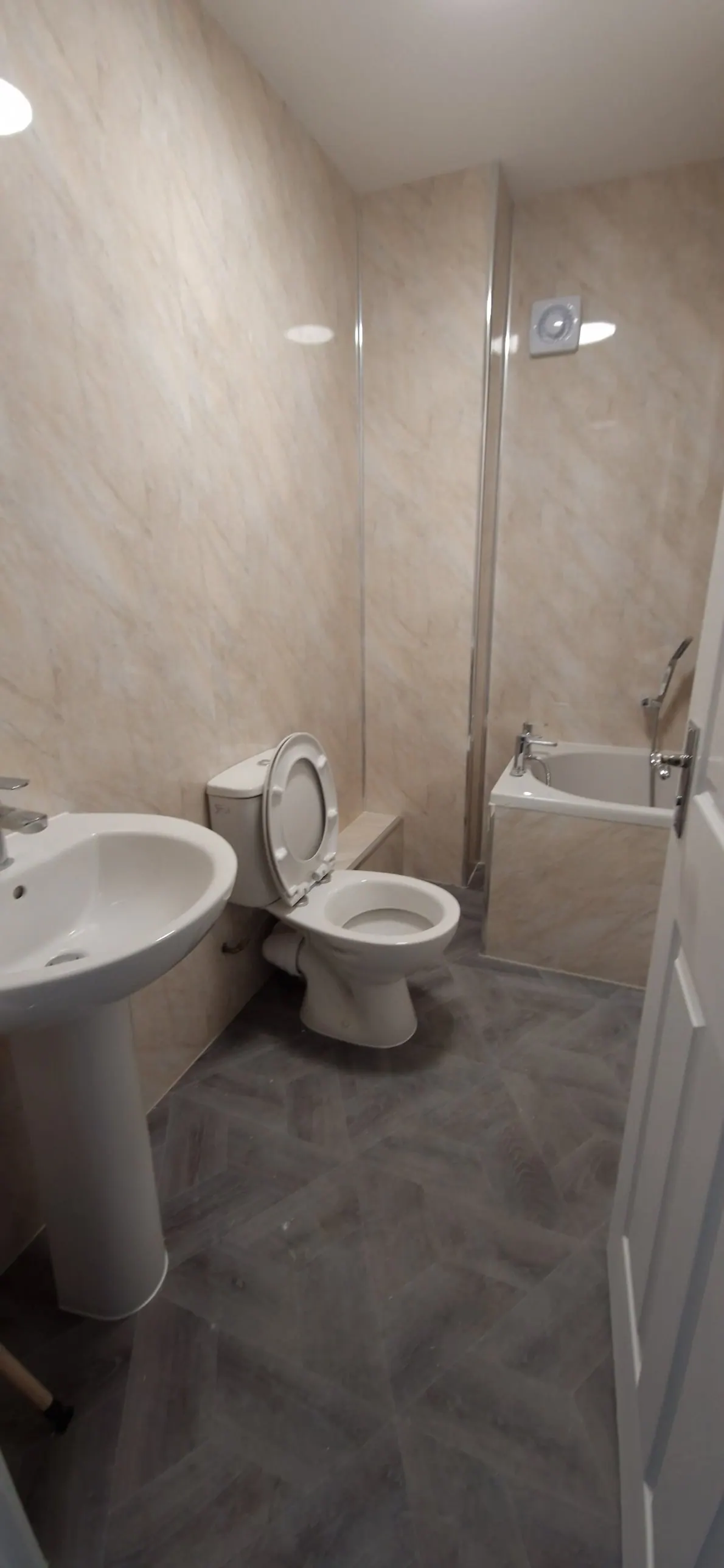
The 2 bed on Bourne Road I turned into a 3 bed
The house on Bourne Road was a 2 bed semi. It had cracks, and everyone else who viewed it walked away. The asking price was £180,000. I knew the cracks could be fixed, so I offered £135,000 in writing, with my reasons. The answer was no, so I walked away. 3 months later the agent rang and asked if my offer was still on the table.
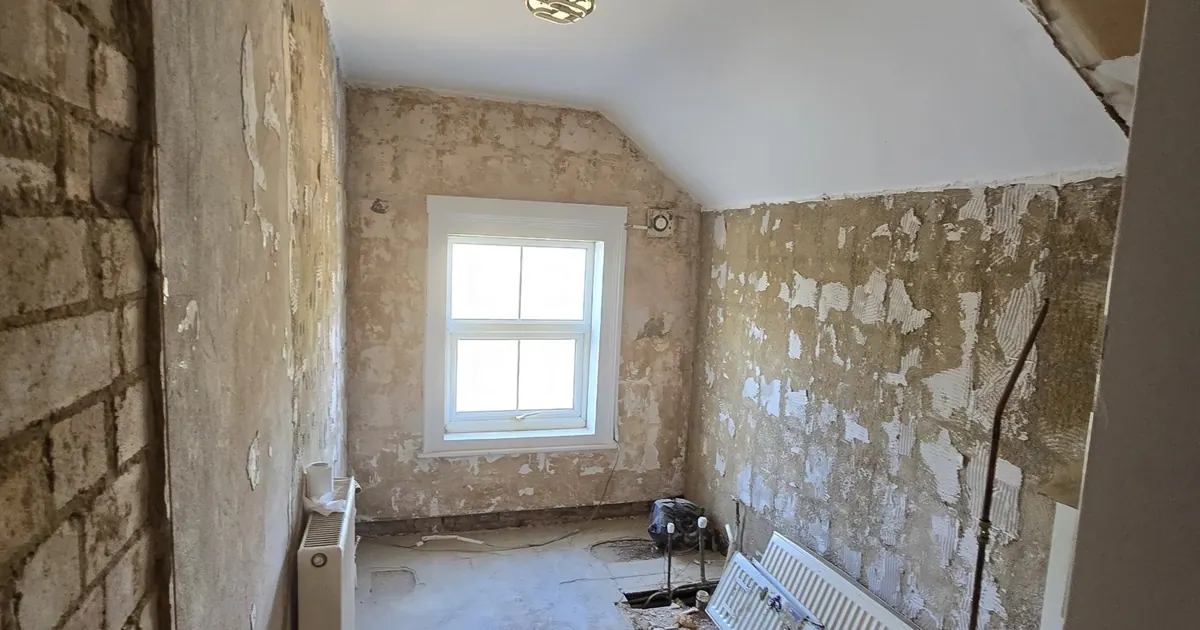
When I looked at the floor plan, I saw a third bedroom being used as a bathroom, at the back of the house with its own window. So we did the swap. The bathroom went into a strip of bedroom 2 and the space over the stairs, and the old bathroom became bedroom 3. It was a 2 bed to 3 bed conversion with no extension, and building control signed it off.
The conversion was one part of the job. The rest was a full back to brick refurbishment. The old suspended timber floor came out and went back as an insulated concrete floor. It had a new kitchen, a new bathroom, new walls, new floors and new electrics. The garden was so full of brambles you couldn't walk down it, so that was cleared and redone as well.
Here are the numbers, side by side. The first column is what happened. The second is what would have happened if I'd done the refurb and left it as a 2 bed, which I'd put at around £180,000 for a done-up 2 bed semi on that street.
The conversion itself added about £3,000 to the refurb, for a new partition wall, a new door, new drainage and the labour. It was a small extra because the bathroom suite and the flooring were being replaced anyway. So the 2 bed column has a £29,000 refurb instead of £32,000.
| As a 3 bed (what happened) | Left as a 2 bed | |
|---|---|---|
| Bought for | £135,000 | £135,000 |
| Refurb | £32,000 | £29,000 |
| Stamp duty, legals and other costs | £9,200 | £9,200 |
| All in | £176,200 | £173,200 |
| Valued at | £225,000 | £180,000 |
| Refinanced at 75% of the value, back out | £168,750 | £135,000 |
| Money left in | £7,450 | £38,200 |
| Rent | £1,100 a month | £850 a month |
| Mortgage and running costs | £364 a month | £297 a month |
| Profit | £736 a month | £553 a month |
| Return on money left in (ROCE) | 118.6% | 17.4% |
On the refinance, the lender lent 75% of the new value, which is how the money came back out. The last line is ROCE, return on capital employed. It's a year's profit divided by the money you've still got in the deal, so it tells you how hard that money is working.
£3,000 more on the refurb added £45,000 to the valuation. As a 3 bed, £7,450 stayed in the deal and it makes £736 a month. As a 2 bed, £38,200 would have stayed in and it would make £553 a month. That's the difference between getting almost all your money back to do the next deal and having it stuck in this one.
Be careful how you read the £225,000, though. The refurb did a lot of the work too. Fixing the cracks and doing the house up took it to the top of the 2 bed range. The third bedroom moved it into the 3 bed range.
None of the £176,200 was mine. My JV partner funded it and I did the work. If you want to know how that works, I've written about how property joint ventures work and how to find private investors for property. The same deal, with the before and after, is on my About page.
Will it work on the house you're looking at?
So could the next house you look at do the same? This is where most people talk themselves out of it. They think they'd never spot it, or that it only works for builders. Spotting it comes down to knowing what to look for. Checking it is a job for the right people, and I'll come to who they are.
I start with the floor plan on the listing, or sketch one when I view if there isn't one. Then I go through these:
- Is the bathroom in its own room with a window, often at the back?
- Is there a box over the stairs in one of the bedrooms?
- Could that bedroom lose a strip along the stairs and still take a bed?
- Where would the new bathroom's waste run? A toilet needs to reach the soil pipe, so ask your builder before you count on it.
- Is the old bathroom window big enough to climb out of in a fire? Bathroom windows are often small, so you may need a new one. More on that below.
- Will there be room for a bed and a door that opens without hitting it?
- What have 3 bed houses on the same street sold for? Use sold prices, not asking prices.
That last one decides whether it's worth doing at all. If 3 beds on the street sell for barely more than 2 beds, the conversion won't pay. If the gap is big, it might be the whole deal.
Before I make an offer, I get a builder round, and a structural engineer to draw up the layout if any wall or floor carries weight. They tell me whether it can be done and roughly what it'll cost, and that's the number that goes into the deal.
If the layout works, the next questions are about permission. There are 2 kinds: planning permission and building regulations.
Do you need planning permission to convert a 2 bedroom house into a 3 bedroom?
Usually not, if all the work is inside the house. Under section 55 of the Town and Country Planning Act 1990, works that affect only the interior of a building don't count as development, so they don't need planning permission.
There are exceptions. If the house is listed, you may need listed building consent for internal changes too. If it's a flat, you'll need the freeholder's consent under the lease before you touch the layout. And if you add a new window or change the outside of the house, check with the council's planning team first, especially in a conservation area.
The Bourne Road house was all internal, so there was no planning application.
Do you need building regulations to add a bedroom?
Yes, almost always. People mix it up with planning permission, but they're 2 separate things. Planning is about how a building looks and what it's used for. Building regulations are about whether it's safe and built properly.
Moving a bathroom, putting up new walls and turning a room into a bedroom change the drainage, can touch the structure, and change how you'd get out in a fire. The Building Regulations 2010 call that a material alteration, so it's building work that has to be approved. For a job like this, your builder or you will usually give the council's building control a building notice before work starts, or submit full plans. They inspect the work as it goes, and you get a completion certificate at the end.
You'll want to keep that certificate. A buyer's solicitor will ask for it when you sell, and you'll want it when you refinance.
These are the rules that come up most on a 2 to 3 bed conversion over the stairs. They come from the government's Approved Documents, which explain how to meet the regulations: Approved Document B for fire safety and Approved Document K for stairs.
An escape window in every first floor bedroom
On a normal 2 storey house with 1 staircase, every bedroom on the first floor needs either an emergency escape window or direct access to a protected stairway, which is a staircase closed off with fire-resisting walls and doors all the way to the front door. Most 2 storey houses don't have one, so that means an escape window. Approved Document B says the opening part of the window must be:
- at least 0.33 square metres
- at least 450mm high and 450mm wide
- no more than 1100mm above the floor at the bottom of the opening.
That catches people out on this conversion, because the new bedroom was a bathroom. Bathroom windows are often small, frosted or set high, so check the old one against those sizes. If it fails, budget for a new window.
A new bedroom you can only get to through another bedroom is called an inner room. It's only allowed if it has its own escape window.
On a 2 storey house where every bedroom has an escape window, Approved Document B doesn't ask for fire doors on the bedrooms. People often assume it does. Fire doors come in when a storey is more than 4.5m above the ground, which is usually a loft conversion on a house that already has 2 floors.
Smoke alarms
When you add a new habitable room above the ground floor, Approved Document B says the house should have a fire detection and alarm system. A habitable room is one you live or sleep in, so a bathroom isn't one and a bedroom is. That means mains-powered smoke alarms, linked together, in the hall and landing at least.
Head height over the stairs
Approved Document K, which covers stairs, gives 2m of clear head height over the stairs and landings. There's a relaxation to 1.9m for loft conversions where the roof slope gets in the way, but this isn't a loft conversion. The box over the stairs is there to give the stairs their head height, so the bath goes on top of it and the box stays where it is. If anyone suggests cutting into it or lowering it to make more room, measure the stairs underneath first.
The bathroom
The new bathroom needs its waste run to the soil pipe, which often means lifting the floor to get the pipes across, and an extractor fan. Both have to meet building regulations. Any electrical work in a bathroom also has to be done and certified properly. A good builder handles this, but it's where most of the cost of the conversion goes.
Is there a minimum bedroom size in the UK?
One thing building regulations don't cover is how big a bedroom has to be. For a house you own or let to a family, there's no single legal minimum size. That surprises people. In practice, the valuer, the agent and the tenant decide whether it counts, based on whether you can get a bed in it with a door and a window.
There are 3 standards you'll hear about, and each applies to something different:
- The Nationally Described Space Standard says a single bedroom is at least 7.5 square metres and 2.15m wide. It's a planning standard for new homes, not a building regulation, and it doesn't apply to changing the layout of an existing house.
- HMO licences have legal minimums: 6.51 square metres for 1 adult and 10.22 for 2. Any part of the room where the ceiling is under 1.5m doesn't count. If you're converting a house to let as an HMO, these decide it.
- Building regulations don't set a room size. They set the escape window, the stair head height and the rest above.
My rule of thumb: if you can't fit a single bed in it with room to stand and open the door, nobody will pay for it as a bedroom, so don't count it as one in your numbers.
How much does it cost to turn a 2 bed into a 3 bed?
Once you know the layout works, meets the rules and will count as a bedroom, the next question is what it costs. It depends on the house, so I won't give you a national average that means nothing on your street. On the Bourne Road house we were ripping everything out and putting it back new anyway, including a new bathroom suite and new flooring. The conversion added about £3,000 on top of that, for a new partition wall, a new door, new drainage and the labour. A loft conversion or an extension would have cost far more.
The way to get your number is to get a builder's quote for the specific layout, plus a structural engineer if any wall or floor carries weight, plus building control's fee. Then it goes into the numbers.
Making the numbers work as a BRRR
BRRR means buy, refurbish, rent, refinance. You buy a house that needs work, do it up, let it, then remortgage on the new value to pull your money back out. The Bourne Road house is a BRRR.
A cheaper house isn't a better BRRR. What matters is what you can buy it for against what it'll be worth once it's done. A third bedroom matters because it raises the done-up value, and that's the number the refinance is based on.
So I work it out backwards. The sold prices of done-up 3 beds on the street give me the end value. Then I take off the builder's price for the conversion and the refurb, and the buying costs, and work out what I can pay so the refinance gives most of the money back. When I run worked examples for mentees I use a £35,000 refurb, not £15,000, because a proper job like the Bourne Road house costs real money.
Two things can stop the money coming back out. The first is the valuation. If the valuer doesn't agree it's a proper 3 bed, the refinance is based on a 2 bed value. That's why the escape windows, the head height and the completion certificate matter so much. The second is timing. Many lenders won't remortgage a property until you've owned it for 6 months. It's a lender rule, not a law, and some lenders will go sooner, so talk to a broker before you buy.
If you're not sure you know enough yet
Most people who read a post like this have the same thought. It looks good, but would I have spotted it? Would I know what to say to the builder, or what to offer?
You don't learn that from one deal. You learn it by going through the whole process in the order a deal happens: picking the area, finding the house, seeing what it could be, getting the numbers right, buying it, doing the work, letting it and refinancing it. The Bourne Road house went through every one of those steps.
If you're thinking about a mentor to go through it with, I've written about how to find a property mentor you can trust. If you're still working out where to start, the free tool below shows you which property strategy fits your money, your time and your goals.
The small print
This post is general education about adding a bedroom to a house, how I did it on one of my deals and how I understand the rules. It isn't legal, financial, tax, building or investment advice, and it isn't an offer or an invitation to invest in anything. I'm not authorised by the FCA, and neither is my company. Past results on one deal don't tell you what you'll get on yours.
Planning and building regulations are as they stood when I wrote this, in November 2026, and are for England. They change, and councils and building control bodies apply them to each house. Check the current position on GOV.UK, the Planning Portal and legislation.gov.uk, and with your council's building control, before you rely on them. Always see qualified professionals before you buy or start work: a builder and a structural engineer for the work, a solicitor for the legal side, a tax adviser for tax, and, where you need one, an FCA-authorised financial adviser.
Questions people ask
What adds value to a property in the UK?
Doing it up, fixing problems that put buyers off like cracks or damp, improving the energy efficiency, adding space and adding a bedroom. Adding a bedroom usually moves the valuation most, because it changes which houses yours is compared with.
How do you add value to a house without extending?
Do it up, fix what's wrong with it, and look for a bedroom inside the walls it already has. On many 2 bed houses you can move the bathroom over the stairs and turn the old bathroom into a third bedroom, with no extension and usually no planning permission.
Can you convert a 2 bedroom house to a 3 bedroom?
Yes, if it has the space. The 4 usual ways are a loft conversion, an extension, splitting a big bedroom in 2, or moving the bathroom over the stairs so its old room becomes the third bedroom. The last 2 use space the house already has, so they're usually cheaper.
How do you convert a 2 bedroom house to a 3 bedroom without an extension?
On many older 2 bed houses the bathroom has its own room with a window at the back. If you move the bathroom into a strip of the bedroom next to the stairs, with the bath on the box over the stairs, the old bathroom becomes bedroom 3. A builder and a structural engineer should check it before you offer.
Do you need planning permission to convert a 2 bedroom house into a 3 bedroom?
Not usually, if all the work is inside. Works that affect only the interior of a building aren't development under planning law. You'll need consent if the house is listed or it's a flat with a lease, and you should check with the council before changing anything outside, like adding a window.
Do you need building regulations to add a bedroom?
Yes, almost always. Moving a bathroom, putting up new walls and creating a new bedroom change the drainage, the fire escape and sometimes the structure, so building control has to approve and inspect them. You get a completion certificate at the end, and you'll need it when you sell or refinance.
How much value does a third bedroom add?
Nationwide's analysis says adding space for an extra double bedroom can add 13% to a typical 2 bed house, assuming a 13 square metre room. On the Bourne Road house it added £45,000, from around £180,000 as a 2 bed to £225,000 as a 3 bed, which is 25%. The sold prices of 3 beds on your street tell you what it could be worth.
How much does it cost to add a bedroom?
It depends on the house and the layout. On the Bourne Road house the conversion added about £3,000, for a new partition wall, a new door, new drainage and the labour, because everything else was being replaced anyway. Reworking the space over the stairs usually costs far less than a loft conversion or an extension, but get a builder's quote for your house before you put a number in your deal.
Does adding a third bedroom add value?
Yes, if it's a proper bedroom. Houses are compared by bedroom count, so a 3 bed is valued against other 3 beds. It has to have an escape window, room for a bed and a door, and be signed off by building control, or a valuer may not count it.
Is there a minimum bedroom size in the UK?
Not for an ordinary house. The Nationally Described Space Standard of 7.5 square metres for a single bedroom applies to new homes through planning. HMO licences set legal minimums of 6.51 square metres for 1 adult and 10.22 for 2. Building regulations don't set a size.
Does a bedroom need a window by law?
A first floor bedroom in a normal 2 storey house needs an emergency escape window, unless it opens onto a protected stairway. The opening part must be at least 0.33 square metres, at least 450mm high and wide, and no more than 1100mm above the floor.
Can you put a bathroom over the stairs?
Yes. The box over the stairs, called the stair bulkhead, is the right height to sit a short bath on. The rest of the bathroom goes in a strip taken from the bedroom next to it. It needs building regulations approval for the drainage, the fan and the electrics, and the box has to stay where it is so the stairs keep their head height.
What can you do with a stair bulkhead?
In a bedroom it's usually wasted. In a bathroom it's the right height to sit a short bath on, which is how this conversion works. Don't cut into it or lower it without measuring the stairs underneath, because it's there to give them 2m of head height.
Does a box room count as a bedroom?
It does if you can fit a bed in it, it has a proper door and an escape window, and the valuer agrees. If it's too small for a single bed, don't count it as a bedroom in your numbers, because nobody else will.
Is a 2 bed or 3 bed house a better investment?
It depends on what you pay and what it's worth once it's done. A 2 bed with the space for a third bedroom can be the best of both, because you buy at the 2 bed price and refinance at the 3 bed value.