How to buy property with no money down: take control now, buy it later
You don't always need a deposit to buy a house. How I take control of a house now and buy it later, why vendors say yes, and how to make sure it's fair to them, with 2 of my own deals.

If you're searching for how to buy property with no money down, you've probably hit the same wall as most people: the deposit.
To buy a £200,000 buy to let with a mortgage, the bank usually wants 25% down. That's £50,000, before stamp duty and fees. On a normal wage, saving that can take years. And all that time, you're watching other people build a portfolio.
So you look it up, and you get 2 kinds of answer. Some people say buying with no money is impossible. Others make it sound too good to be true. Both are wrong.
You can buy property with none of your own money. I've built my portfolio that way. But it isn't free, and it only works when you solve a problem for the person selling. That's what creative property investing is. Instead of buying the normal way, you agree different terms with the vendor, because those terms suit you both.
In this post I'll show you one of the ways I do it: take control of a house now, and buy it later. I'll walk you through a real deal of mine, why vendors say yes, and how to make sure it's fair to them. What I say about the law and tax is as it stood in November 2026, for England, and the small print is at the end.
First, the deal.
How I took control of a house with no money down
A couple were splitting up. Their house had been for sale for 11 months. They'd dropped the price from £260,000 to £220,000, and still nobody bought it. They owed £190,000 on the mortgage, and they were still paying it every month.
Most investors would walk away from that house. I sat down with the couple instead, and we worked out together what a normal sale would leave them with. There were early repayment charges, which are fees for paying a mortgage off early, plus solicitor's and agent's fees. At best, they'd have walked away with about £10,000 each.
So we gave them that. We paid them £20,000 up front and, in effect, bought their mortgage off them. That money came from a joint venture partner, not me. Then we took over their mortgage payments, and I rent the house out. When the agreed time is up, I buy it for whatever's left on their mortgage.
They got out of a house they couldn't sell, without it costing them a penny. In return, they can't sell it to anyone else while our deal runs, and if prices go up, that's mine. I got a house that pays me every month, with none of my own money in it.
There's a name for what we did. It's called a purchase lease option.
What is a purchase lease option?
You'll sometimes hear it shortened to a lease option. I always use the full name, because it tells you its 3 parts.
- Purchase. You agree the price you'll buy the house for, fixed today.
- Lease. You take the house over and look after it. You pay their mortgage and rent the house out.
- Option. You have the right to complete the purchase later, within a set time. Option means you can buy it, but you don't have to.
How much you pay up front depends on what the vendor needs. It can be as little as £1. On mine it was £20,000, because that's what the couple would have walked away with from a sale.
Which leaves the question you're probably asking: if you haven't got a deposit, how do you buy the house at the end?
Can you buy a property without a deposit?
Yes. The house saves it for you. You take control of it now, without a deposit. You rent it out. The rent pays the costs, and what's left over builds up over the years into the deposit. When the time comes to complete, most investors get their own mortgage and use that money as the deposit.
If you're buying a home to live in, that's a different question. A few lenders offer 100% mortgages to people buying their own home, and a mortgage broker is the person to ask. For a buy to let, lenders want a deposit, which is why investors buy this way.
You'll still need money for the legal fees, and stamp duty when you buy. That can come from the same savings, or from a partner.
So "no money down" means none of your own money. It doesn't mean free. Somebody still funds it: a joint venture partner's cash, the rent building up over time, and the vendor agreeing to wait.
One rule I never break. The numbers have to work before I agree anything, so I know I can buy at the end. If I can't, I'd be handing the vendor their problem back later. People talk.
So the deal has to work for the vendor as much as for you. That brings up the question every beginner asks me.
Why would a vendor agree to a purchase lease option?
Because it solves a problem that a normal sale doesn't. That's the whole strategy. What you're looking for is a vendor with a problem you can fix.
These are the kinds of problems I see:
- They owe more than the house will sell for, which is called negative equity, so selling costs them money.
- They need to move on, but they can't afford to while they're stuck with this house.
- They're a landlord who's had enough of tenants, repairs and letters from the bank.
- They're partway through a fixed rate, and paying it off early would cost them thousands in fees.
- They want their full price, nobody will pay it, and they're happy to wait.
If a vendor has no problem, there's no deal. And if they need all their money today, this isn't for them. I don't try to force it.
Some vendors want more certainty than a purchase lease option gives them, because with an option you can walk away. For them, there's a locked-in version.
What is exchange with delayed completion?
It's the locked-in version of the same idea.
When you buy a house, there are 2 big days. Exchange is when you both sign the contract and nobody can pull out. The buyer usually pays a deposit at this point. Completion is when the rest of the money is paid and the house becomes yours. Normally they're a few weeks apart. With a delayed completion, you exchange now and complete months or even years later.
The difference from a purchase lease option is that both of you are locked in. With a purchase lease option, you can choose not to buy. With a delayed completion, you have to.
Here's one I did. I used it on a probate house, which is a house being sold by the family of someone who has died. It needed a full refurbishment, and it had a side garden big enough for another house. The family were asking £159,950 and weren't moving on price.
So I paid their full price. In return, I asked to exchange now, complete later, and have the keys straight away. The keys let me in. The house only became mine at completion.
I used a delayed completion here, not a purchase lease option, because I was about to spend real money. I was doing a refurb and applying for planning permission on the side garden. I wouldn't do that on an option, where I might end up not buying. I wanted a contract that says the house is mine on a set date.
While we waited, I did the refurb, got planning on the side garden and put a tenant in. Once the house was mine, I sold the plot to a builder, and that paid back the money I'd put in. The family got their full price and a sale they could count on.
Both of my vendors came out better off. But not every deal like this is done fairly, and you should know the difference before you start.
Is a purchase lease option fair to the vendor?
Look this up and the first page you'll find is Citizens Advice. They warn people selling their home that these deals can be risky, and are best seen as a last resort.
They're right about the bad ones. Some people tie a vendor up with a deal they never mean to finish, or take over the payments and then stop. A fair deal answers every risk on their list. This is how I check mine.
| What Citizens Advice warns about | What a fair deal does |
|---|---|
| The mortgage stays in the vendor's name, so if the buyer stops paying, the vendor still owes it | The numbers work, so the payments keep coming and the buyer can afford to finish the deal. The agreement says what happens if a payment is missed |
| The vendor may break their mortgage rules | The vendor's bank agrees to the house being rented out before anything starts |
| Fees may be unclear and the terms unfair | Every payment is written into the agreement, and the vendor has their own solicitor to check it. I never put anyone off getting one |
| These deals aren't regulated by the government | The deal goes on the house's record at HM Land Registry, the government's record of who owns what, so anyone buying or lending on the house can see it |
| If the vendor stays living in the house, it's really a sale and rent back | Those are regulated by the FCA, the Financial Conduct Authority, and the buyer needs to be authorised by them. I'm not, so I don't do them |
Every vendor also hears from me up front what they're giving up, and that I can pass the deal on to another buyer. Neither goes in the small print.
Getting the paperwork right protects you as well as the vendor. 2 parts of it catch beginners out: the stamp duty and the solicitor.
Do you pay stamp duty on a purchase lease option?
Stamp duty is a tax you pay when you buy a house. On these deals, when you pay it can catch you out.
On a delayed completion, it's normally due when you complete. But if you get the keys early, it's due from that day, because the law treats you as having taken the house over. HMRC counts getting the keys and being allowed in as taking it over. I had the keys on the probate house, so I paid stamp duty when we exchanged, not at the end.
On a purchase lease option, there can be some to pay when you agree the option, worked out on what you pay up front, and then the rest when you buy. So don't assume there's nothing to pay until the end.
The rates change often, so check them on GOV.UK. And get a tax adviser to work out yours before you sign.
Do you need a solicitor for a purchase lease option?
Yes, and it needs to be one who does these deals regularly. A deal like this has to be in writing and signed by both of you, and not every solicitor does them.
I use MS Law, a property firm in Manchester, and I recommend them to anyone I mentor. Their site says they do straightforward options to buy a property later, and options that depend on things like getting planning permission.
The vendor needs their own solicitor too. If they haven't got one, I tell them to get one.
If you want to learn how to do this
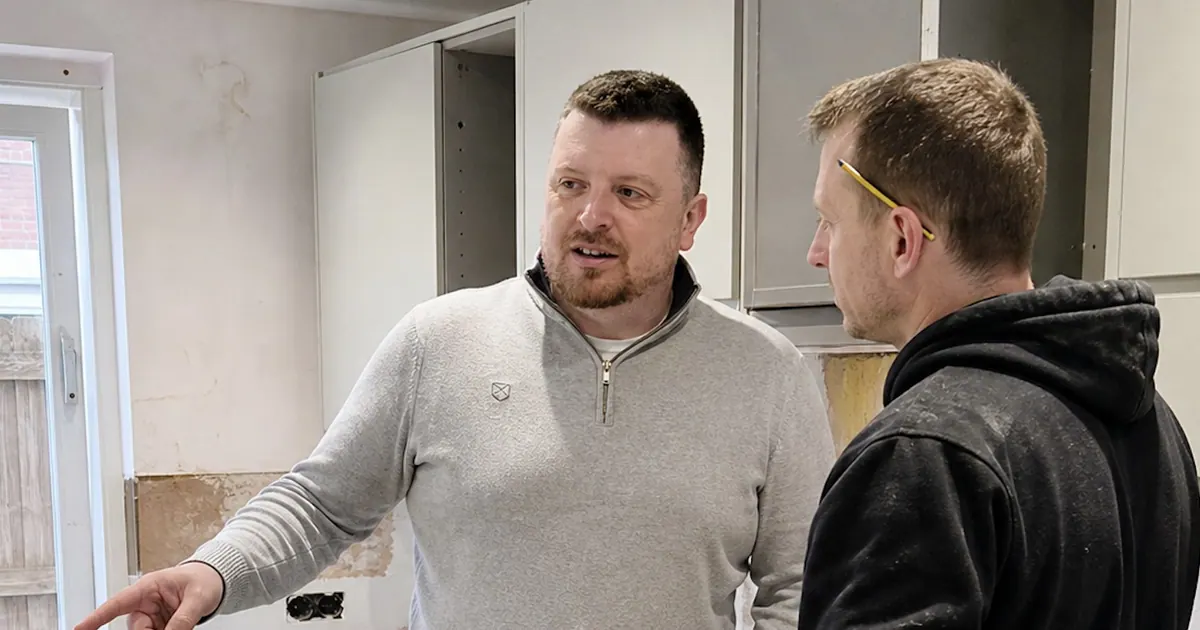
Knowing how to buy property with no money down is the easy part. The hard part is sitting at a vendor's kitchen table. You have to find out what their problem really is, work out whether the numbers stack up, and know when to walk away.
That's what my masterclass is for, and the details are below. If you'd rather start with something free, watch my No Money Down workshop first.
If the money is what's stopping you, I've also written about how to find private investors for property. And there's more about how I invest on my About page.
The small print
This post is general education about buying property using a purchase lease option or exchange with delayed completion, how I've done it and how I understand the rules. It isn't legal, financial, tax or investment advice, and it isn't an offer or an invitation to invest in anything. I'm not authorised by the FCA, and neither is my company. Past results on my deals don't tell you what you'll get on yours.
Contract law, Land Registry practice, financial services rules and stamp duty are as they stood when I wrote this, in November 2026, and are for England. Wales has Land Transaction Tax instead of stamp duty, and Scotland works differently. The rules change. Check the current position on GOV.UK and legislation.gov.uk before you rely on it. Always see qualified professionals before you agree anything: a specialist solicitor for each side, a tax adviser for the stamp duty and tax, a specialist mortgage broker for the lending and, where you need one, an FCA-authorised financial adviser.
Questions people ask
How do you buy property with no money down?
You agree a price with the vendor now, take control of the house, and buy it later. While you wait, you rent it out, and the money left over builds up into your deposit. The up-front payment can be as little as £1, or it can come from a joint venture partner.
Do you need a deposit to buy a property?
Not with a normal mortgage, because the bank wants a deposit. But you can take control of a house now with little or no money, using a purchase lease option, and save the deposit from the rent before you buy.
Can you buy property with no money in the UK?
The 2 ways I use are a purchase lease option and exchange with delayed completion. Both let you agree a price now and pay later. You can also use other people's money, through a joint venture partner or a private investor.
Is no money down property investing real?
Yes, but it isn't free. Somebody still funds it: a partner's cash, the rent saved over time, and the vendor agreeing to wait. A no money down property strategy only works when you solve a real problem for the vendor.
What does purchase lease option mean?
A way to take control of a house now and buy it later. It has 3 parts. You agree to purchase at a fixed price, you lease the house and rent it out, and you have the option to complete the purchase within a set time.
Is a purchase lease option a good idea?
For the right vendor, yes. It suits someone who owes close to what the house is worth, or wants their full price and can wait. It doesn't suit anyone who needs all their money now. The buyer must be able to complete at the end.
Is a lease option the same as a purchase lease option?
Yes. A lease option is the short name people use. I call it a purchase lease option because it has 3 parts: you agree to purchase, you lease the house, and you have the option to complete.
How much do you pay up front on a purchase lease option?
Whatever you agree with the vendor. It can be as little as £1. On my deal it was £20,000, because that's what the couple would have walked away with from a normal sale.
Is buying property with no money down legal?
Yes. A purchase lease option and exchange with delayed completion are both legal in England, as long as they're in writing, signed by both of you, and the vendor has their own solicitor.
How does exchange with delayed completion work?
You sign the contract now, so you're both locked in, but the sale finishes months or years later. The price is fixed when you sign. You can agree to have the keys while you wait.
Is it safe for the vendor?
It can be, if it's done properly. The vendor should have their own solicitor, their bank's permission, the deal protected at HM Land Registry, and an agreement that says what happens if a payment is missed. Citizens Advice's warnings are worth reading first.
When is stamp duty paid on a purchase lease option?
There can be some to pay when you agree the option, worked out on what you pay up front, and then the rest when you buy. Get a tax adviser to work out yours.
Can you do this in Scotland?
Purchase lease options aren't used in Scotland. Exchange with delayed completion is the route there instead.
What is creative property investing?
Buying property in a way that isn't the normal cash or mortgage purchase. That usually means agreeing different terms with the vendor, like paying later or in stages, because it solves a problem for them.
Do I need a specialist solicitor?
Yes, one who does these deals regularly. I use MS Law and recommend them to the people I mentor. The vendor should have a solicitor of their own too.